
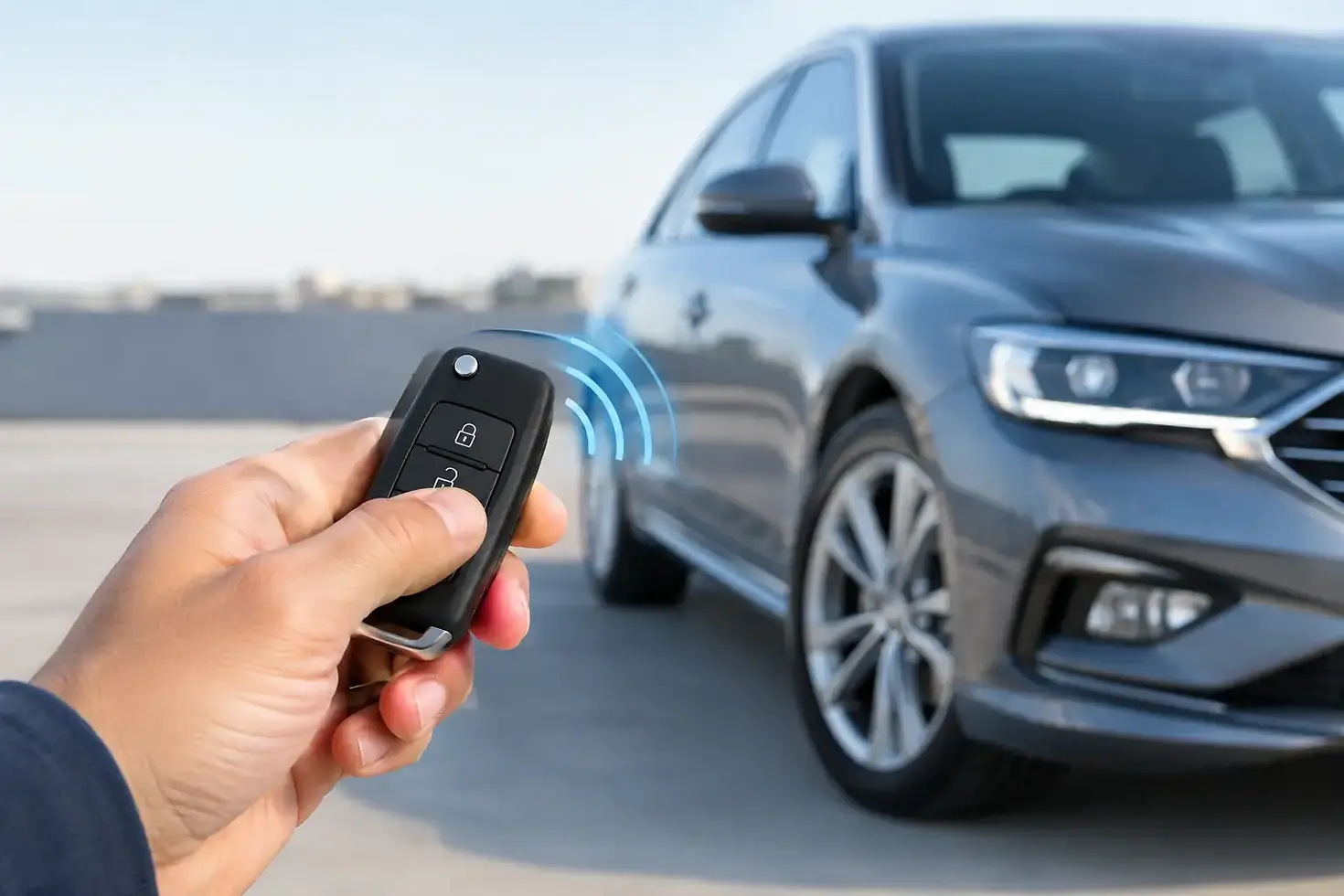
Proximity Key Differences Every Driver Should Know

A proximity key can feel effortless when it is working. Keep the fob in a pocket or bag, touch the door handle and press the start button. When it fails, however, the proximity key differences between your vehicle’s systems quickly matter. The right diagnosis can be the difference between a simple battery change and an all-keys-lost programming job.
For drivers across the West Midlands, the most useful point is this: a proximity key is not just a remote control. It is an electronic security device linked to your vehicle. It must be recognised by the car before keyless entry and push-button starting will work.
What is a proximity key?
A proximity key, often called a smart key or keyless fob, allows the vehicle to detect an authorised key nearby. Rather than inserting a blade into the door or ignition, you can usually unlock the car by touching the handle and start it by pressing a button while the fob is inside the cabin.
The system uses short-range radio communication and an immobiliser transponder. The car sends out a request, the key responds with the correct encrypted information, and the vehicle permits access or starting. Exact operation varies by make, model and year.
Most proximity fobs still contain a mechanical emergency blade. This blade can unlock the driver’s door if the fob battery is flat or the vehicle battery has failed. It will not normally start the engine on its own, but it gets you into the vehicle so you can use the emergency starting procedure where supported.
Proximity key differences: smart keys, remotes and transponder keys
These terms are often used interchangeably, but they describe different levels of vehicle access and security.
Standard remote key
A standard remote key has buttons to lock and unlock the vehicle. You press a button, and the remote sends a signal to the car. Many also contain a transponder chip for the immobiliser, so the key must still be recognised when it is placed in or near the ignition.
A remote key does not necessarily provide passive entry. If you must press the unlock button before opening the door, it is usually a remote system rather than true proximity entry.
Transponder key
A transponder key may look like a basic key with a plastic head. Inside is a small chip that communicates with the immobiliser. The blade turns the ignition, but the engine will only start when the transponder is correctly programmed.
This is why a copied metal blade alone can unlock a door but may not start the vehicle. The physical cut and the electronic coding are separate requirements.
Proximity or smart key
A proximity key gives passive access. The car detects the fob when you approach, provided the key is within range and its battery has enough power. Many systems also provide keyless start, where the fob only needs to be inside the vehicle.
Because the fob has more functions and security data than a basic key, replacement and programming can be more involved. It needs to be compatible with the vehicle and programmed with professional equipment.
Keyless start is not always keyless entry
Some cars have a start button but require you to press the fob to unlock the doors. Others allow passive unlocking but have a conventional ignition barrel. Features are often specified differently across trims, so never assume a replacement fob will add functions your vehicle did not leave the factory with.
Why proximity keys stop working
The most common cause is a weak fob battery. You may notice the vehicle needs you to stand closer than usual, passive entry stops first, or a dashboard message tells you the key battery is low. Replacing the correct battery may restore normal operation, but take care not to damage the case, buttons or internal circuit board.
A flat vehicle battery can produce very similar symptoms. The fob may be fine, but central locking, door-handle sensors and push-button start may not respond because the car has insufficient power. If interior lights are dim or the car does not react at all, check the vehicle battery before assuming the key has failed.
Other causes include water damage, impact damage, worn buttons, a fault in the vehicle’s keyless-entry antenna or a key that has lost programming. A fob that has been through a wash cycle or dropped repeatedly may work intermittently before failing completely.
Interference can also cause short-term problems. Busy car parks, poorly shielded electronic equipment and other radio sources may affect signal communication. Move the vehicle or hold the fob against the emergency start point shown in the handbook. If it starts there, the car may be reading the transponder at close range but not detecting the fob normally.
What to do when your proximity key will not unlock or start the car
Start with the practical checks. Try your spare key if you have one. If the spare works, the problem is likely with the original fob rather than the vehicle. Check for a low-key-battery warning and, if safe to do so, fit a new battery of the correct type.
If the doors will not open, release the emergency blade from the fob and use the concealed mechanical lock, usually located behind a small cover on the driver’s door handle. Do not force the cover or key blade. Plastic trim and lock components can be damaged easily.
Once inside, consult the vehicle handbook for the emergency start position. On many vehicles, placing the fob against a marked area, near the steering column or in a centre-console slot allows the vehicle to detect it. This arrangement differs between manufacturers.
If you have lost all keys, do not keep trying improvised methods to gain entry or start the car. Modern immobiliser systems are designed to prevent this. A mobile auto locksmith can use non-destructive entry techniques, cut the correct emergency blade where needed and program a replacement key at your location.
Replacement proximity keys: what affects the job?
A replacement is not simply a matter of buying a similar-looking fob. The frequency, internal electronics, transponder type, key blade profile and programming procedure must match the vehicle. Even fobs that look identical can be incompatible.
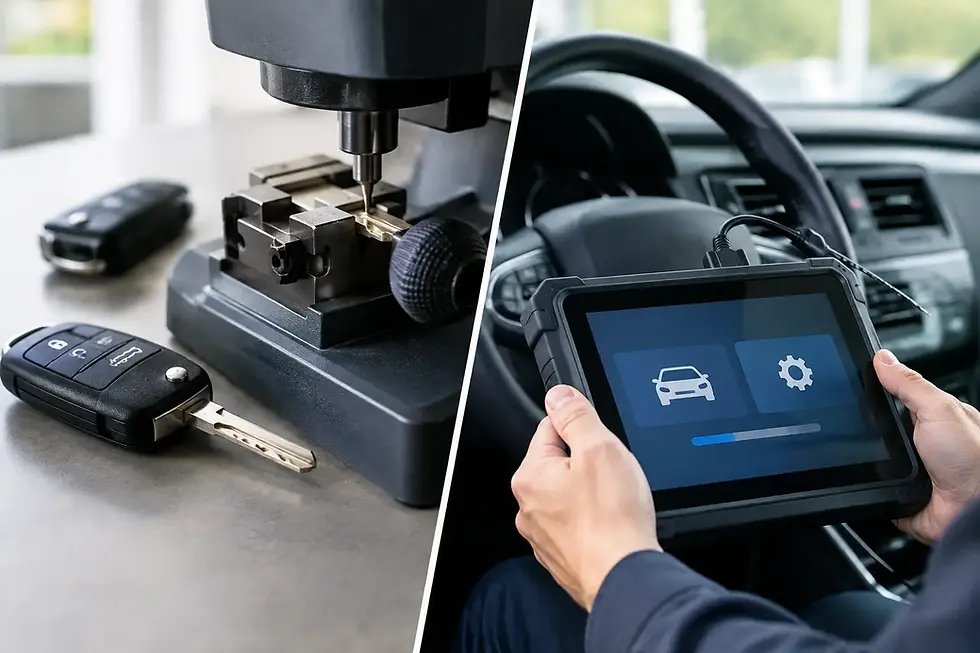
If you still have a working key, producing a spare is usually more straightforward. The technician can confirm the vehicle details, supply a compatible proximity fob, cut any emergency blade and add the new key to the car’s system. In many cases, on-site cutting and programming takes around 30 to 60 minutes, although some vehicles require longer diagnostic procedures.
An all-keys-lost situation is more involved. The vehicle may need to be accessed, security information obtained and new keys introduced to the immobiliser from scratch. The previous missing keys can often be removed from the vehicle memory, helping protect the car if they were stolen rather than misplaced.
Cost depends on the vehicle registration, make, model, year and key system. A clear quote based on the registration is more useful than a vague price, because it confirms the likely key type and work required before attendance.
Can you keep driving with a failing proximity key?
Sometimes, but it is a risk. A weak battery can become fully flat without much warning. A damaged fob can stop communicating after you have parked at work, at the shops or away from home. If your only key is intermittent, arranging a spare before it fails is usually the less stressful and less costly option.
Keep the fob dry, avoid storing it next to strong electronic devices, and do not leave it in a vehicle that uses passive entry. If the car is fitted with an emergency blade, make sure you know how to remove it before you need it in the rain or at night.
When to call a mobile auto locksmith
Call for immediate assistance if you are locked out, have lost your only key, your proximity fob will not start the car, or a replacement key needs programming at home, work or roadside. Ro Driveline provides mobile key cutting, diagnostics and programming across Wolverhampton, Birmingham, Walsall, Dudley and the wider West Midlands, with non-destructive entry wherever possible.
Have your vehicle registration, location and a brief description of the fault ready when requesting a quote. That lets the technician identify the likely proximity system, bring suitable equipment and give you a clearer answer before setting off.
A proximity key problem does not have to leave you stranded. Get a free quote or request immediate assistance, and a trained mobile locksmith can help restore access and get you moving again.


Comments