
Key Cutting Versus Coding: What Your Car Needs

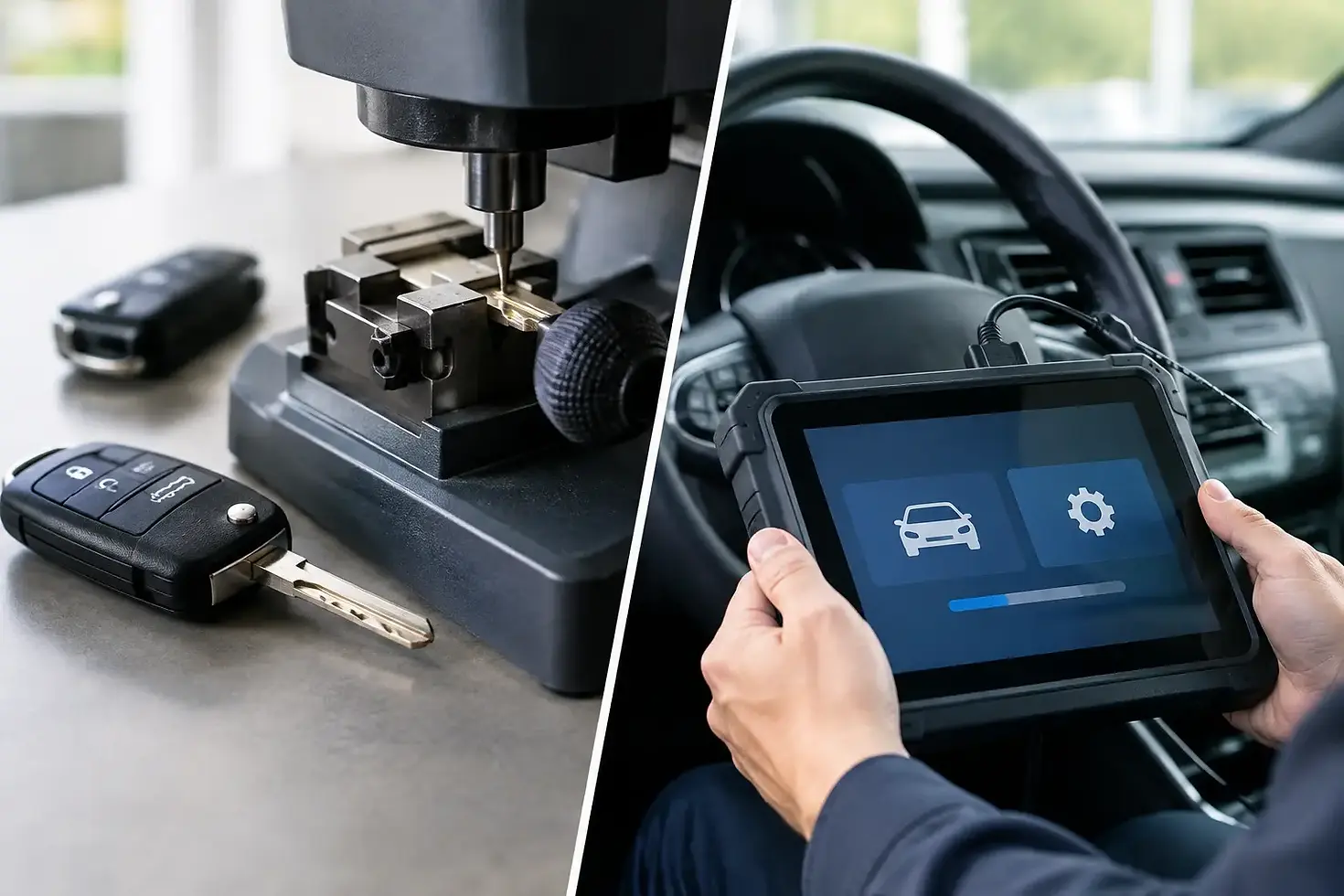
A new car key can look complete, yet still leave you standing beside a vehicle that will not start. That is the practical difference in key cutting versus coding: cutting creates the physical key profile, while coding allows the vehicle to recognise the key electronically. For many cars on UK roads, a replacement needs both jobs completed correctly before you can drive away.
If you have lost a key, damaged a remote, or simply want a spare before it becomes an emergency, knowing the difference helps you ask for the right service and understand the quote. A professional mobile auto locksmith can usually handle the work at your home, workplace or roadside location, avoiding recovery and a dealer visit.
What key cutting does
Key cutting is the process of shaping the metal blade to match your vehicle's locks and ignition. On older vehicles, that may be all a key needs. Once cut accurately, the key turns the door lock and ignition barrel, and the car starts.
Modern vehicle keys are more precise. Many use laser-style or sidewinder cuts, internal tracks, high-security profiles or a key blade hidden within the remote fob. These keys must be cut to the correct code or decoded from an existing working key or lock. A blade that is even slightly inaccurate may stick, fail to turn, or cause wear to the lock or ignition over time.
For a spare key, cutting is often straightforward when you have a working original. For an all-keys-lost situation, the locksmith may need to obtain the key code through approved methods, decode a lock, or use vehicle information and specialist equipment. This is why lost-all-keys work can take longer than copying a spare.
What cutting alone can achieve
A correctly cut key can give you mechanical access to the vehicle. It may open the driver's door, boot or glovebox, depending on the vehicle. However, on most cars built over the last two decades, it will not start the engine unless its transponder chip has also been programmed.
That distinction matters when buying a blank key online. A cheap blade or remote shell can sometimes be cut, but it does not automatically contain the right electronic chip, frequency or circuit board for your car. Even when it physically fits, it may not be suitable for programming.
What car key coding does
Coding, often called programming, pairs the electronic part of a key with your vehicle. Depending on the make, model and year, this may involve a transponder chip, remote central-locking functions, keyless entry, push-button start or all of these systems together.
When you turn the ignition or press the start button, the vehicle checks for an authorised electronic signal. If the transponder is not recognised, the immobiliser remains active. The dashboard may show a key or immobiliser warning light, and the engine may crank without starting - or not crank at all.
Remote coding is related but not always identical to immobiliser programming. A key can sometimes start the car but fail to lock or unlock it remotely. Equally, a remote can operate the central locking while an unprogrammed transponder prevents the engine from starting. Proper replacement work checks every function before the job is finished.
Why coding varies by vehicle
There is no single programming method for every car. Some vehicles allow a replacement key to be added through the diagnostic port in a short appointment. Others require security access, PIN retrieval, module communication or specialist procedures. Smart-key systems and certain prestige, newer or keyless vehicles can involve additional steps.
The condition of the vehicle also affects the process. A car with one working key is generally simpler to programme than a car with no keys at all. A flat vehicle battery, damaged ignition barrel, faulty steering lock or existing immobiliser fault can also need attention before a new key will work.
For this reason, a reliable quote starts with the registration number, make, model, year and a clear description of what has happened. It allows the locksmith to identify the likely key type and arrive with suitable equipment and stock where possible.
Key cutting versus coding: why most replacements need both
For a traditional metal key with no immobiliser, key cutting may be enough. These are now the exception rather than the rule. Most vehicles need a blade cut for the locks and an electronic chip coded for the immobiliser. If the key includes buttons, the remote functions may need programming as well.
Think of it as two separate permissions. The cut blade gives the key permission to operate the mechanical lock and ignition. The programmed chip gives it permission to start the vehicle. A smart key may add a third layer, allowing keyless entry and push-button start when it is detected inside or near the car.
The right service depends on your situation:
If your existing key starts the car but the blade is worn or broken, a new cut blade or replacement key may solve the problem.
If the key turns in the ignition but the car will not start and an immobiliser light is showing, coding or a fault diagnosis may be required.
If the buttons have stopped working but the engine still starts, the remote battery, fob board or remote programming could be the issue.
If every key is lost, a replacement key must usually be cut and coded from the beginning.
A professional will test the key rather than assume the problem is one thing. This prevents paying for a replacement blade when the fault is actually electronic, or programming a fob when a damaged lock is the real cause.
When you need urgent on-site help
Being locked out, losing your only key or finding a keyless fob has failed can disrupt work, school runs and travel plans quickly. The safest response is not to force the door, break a window or attempt to bypass the ignition. Those actions can turn a key problem into costly damage.
A mobile auto locksmith can attend with key-cutting machines, diagnostic tools and programming equipment. Non-destructive entry is used wherever possible to regain access without harming the vehicle. Once access is restored, the technician can assess whether you need a new key, coding, a battery replacement, remote repair or an ignition-related service.
Ro Driveline provides this work across Wolverhampton, Birmingham, Walsall, Dudley and the wider West Midlands, with clear upfront pricing based on the vehicle registration. For many replacement and spare-key jobs, the key can be cut and programmed where the vehicle is parked. Typical programming can take around 30 to 60 minutes, although all-keys-lost jobs and complex security systems may take longer.
Spare keys are usually the easier option
A spare key is not just a convenience. It is often the simplest way to avoid the higher cost and disruption of an all-keys-lost situation. With a working key available, the locksmith can usually copy the mechanical cut and add a new programmed key without needing emergency access or more involved security procedures.
Choose a spare that suits how you use the car. A basic transponder key can be a sensible backup for some vehicles, while a full remote or smart key may be better if several drivers use the vehicle daily. The important point is that it is tested: it should unlock the car, start the engine and operate the remote functions you expect.
Keep the spare separate from your main key. Leaving both on the same keyring or storing the spare inside the vehicle defeats the purpose. A secure place at home, or with a trusted family member, provides a genuine fallback when a key goes missing.
Avoiding common replacement-key mistakes
The lowest advertised price is not always the lowest final cost. Quotes should account for the correct key type, blade cutting, transponder programming, remote functions and any callout needed. A transparent provider will explain what is included before work begins.
Be cautious with used keys and unknown online fobs. Some can be reused on certain vehicles, but many are locked to their original car or are poor-quality copies that cannot be reliably programmed. Compatibility is about more than appearance. The chip type, frequency, circuit board, blade profile and vehicle security system all matter.
It is also worth checking the symptoms before assuming the key has failed. A weak fob battery may affect remote locking, but it rarely causes an immobiliser problem on a conventional transponder key. If your car has keyless start, a low key battery can sometimes stop detection altogether. A technician can test this quickly and advise whether a battery, repair or full replacement is appropriate.
When your key fails, the goal is simple: regain access, receive a properly working key and leave without damage to your vehicle. Call now for immediate assistance, or arrange a spare key while you still have a working one.


Comments