
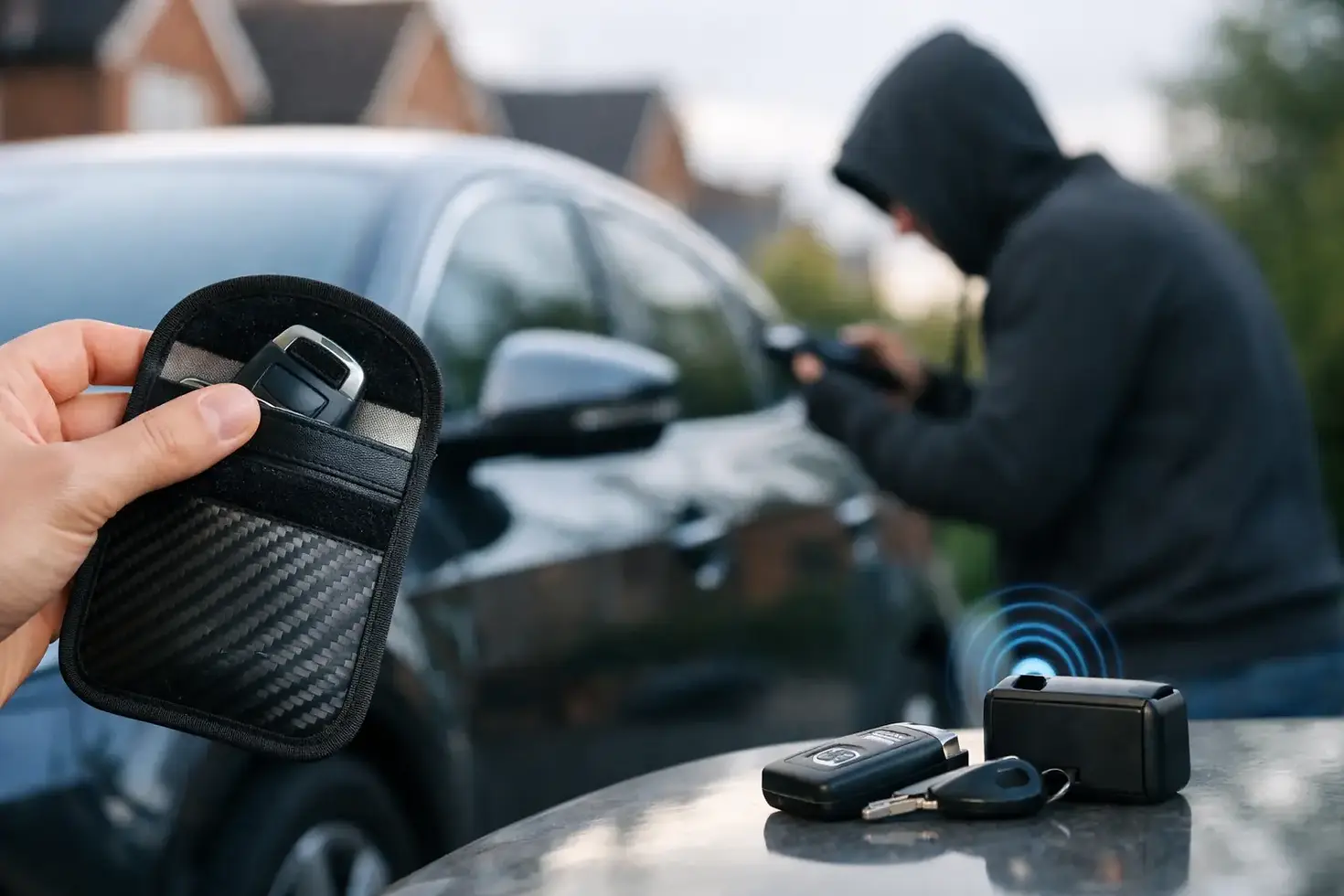
Keyless Theft Prevention for West Midlands Drivers

A keyless car should make everyday driving easier, not leave you worrying about whether it is secure outside your home. Effective keyless theft prevention is usually straightforward: protect the signal from your key, use the vehicle’s built-in security settings and avoid leaving a fault untreated. Small habits can make a meaningful difference, particularly for cars parked on driveways or on the road overnight.
Keyless entry systems are fitted to many modern vehicles across the West Midlands. They are convenient, but drivers need to understand what the system does, where the risks are and when a key or vehicle fault needs professional attention.
What keyless theft is - and what it is not
Most concerns centre on relay theft. In simple terms, criminals may attempt to extend the communication between a nearby keyless fob and the vehicle, making the car believe the key is closer than it really is. This can allow access to a vehicle in some circumstances.
That does not mean every keyless car is equally vulnerable, or that a keyless fob automatically makes a vehicle an easy target. Manufacturers have introduced improved encryption, motion sensors and sleep modes on many newer systems. The level of protection depends on the make, model, age and specification of your car.
It is also worth separating suspected theft risk from a faulty keyless system. A car that will not unlock, intermittently fails to detect its key or displays a key warning may simply have a weak fob battery, damaged remote, vehicle battery issue or programming fault. These problems should be diagnosed properly rather than ignored.
Keyless theft prevention starts at home
Where you keep your key matters. Avoid leaving a keyless fob on a hall table, windowsill or hook immediately inside the front door. Store it further into the property, ideally away from external doors and windows. This is a sensible first step, although distance alone is not a complete security measure.
A good-quality signal-blocking pouch or box can provide an additional layer of protection. It should be tested regularly, not just assumed to work. Put the key inside, stand beside the vehicle and check that the car does not respond to the handle or start request. If it does respond, the pouch or box is not blocking the signal effectively and should be replaced.
Keep spare keys protected in the same way. A spare fob is often forgotten in a drawer near the front of the house, yet it may be the key most consistently kept in one location. If you use a key cabinet, choose a position away from external walls.
For drivers with attached garages, do not leave the keyless key inside a car parked in the garage. Keep it in the house and protected. Equally, avoid storing vehicle documents, spare keys or security codes in the car.
Use your vehicle’s security features
Some vehicles allow keyless entry to be switched off while retaining push-button starting. Others have fobs that enter sleep mode after a period without movement, reducing the chance of unwanted signal relay. The available option varies between manufacturers and even between model years.
Check your vehicle handbook or ask a qualified auto locksmith to explain the options for your specific registration. Do not disable features at random if you are unsure, as settings may affect how you access or start the vehicle. The aim is to keep the car convenient for normal use while reducing unnecessary exposure.
Always confirm that the vehicle has locked when you walk away. Listen for the lock sound where applicable, look for the indicator flash and, if safe to do so, check the door handle. Never assume that walking away has locked the car, especially if the fob battery is weak or there is radio interference nearby.
Build security in layers
No single product or habit guarantees that a car cannot be targeted. The most practical approach is to combine several reasonable measures. Good parking, protected keys and visible physical security can make a vehicle less attractive than one with no obvious protection.
If possible, park on a driveway, in a locked garage or in a well-lit area covered by a doorbell camera or CCTV. Lighting and cameras do not physically stop theft, but they can improve visibility and provide useful evidence if an incident occurs. Make sure your camera setup is positioned lawfully and covers your own property appropriately.
A steering wheel lock is a visible deterrent and can add delay even where a vehicle has keyless entry. Choose a solid, well-fitted product and use it every time the car is left for extended periods. It is not a replacement for protecting the key signal, but it is a worthwhile extra layer for many vehicles.
Depending on your vehicle and insurer, you may also consider a professionally installed tracker, alarm upgrade or diagnostic-port protection. These options are not necessary for every driver. They make most sense where the vehicle is particularly desirable, regularly parked in a higher-risk location or required for work. Check that any modification is compatible with your car and declared to your insurer if required.
Do not overlook ordinary key security
The easiest route into a vehicle is still often an unlocked door, an exposed key or a key handed over through a scam. Keep keys with you at home, in the workplace and on holiday. Do not leave them in a coat near a public entrance, on a desk visible through a window or in an unattended bag.
Be cautious if someone contacts you claiming to need vehicle details, key codes or a photograph of your key. A legitimate locksmith will need accurate vehicle information to quote and programme a key, but should explain why the information is needed and provide a clear point of contact. Never publish a close-up photo of your key blade or key code online.
If you sell a vehicle, make sure all keys are accounted for. If one is missing, tell the buyer. If you have bought a used car with only one working key, arranging a spare is a sensible preventative step. It reduces the disruption of losing your only key and gives you a clearer record of how many working fobs exist.
When a keyless fob needs attention
A failing key can create both security and access problems. Common warning signs include reduced remote range, repeated messages that the key is not detected, buttons that only work intermittently or a vehicle that starts only when the fob is placed in a particular emergency position.
Start with the fob battery, using the correct type and fitting it carefully. If a new battery does not resolve the issue, avoid repeatedly forcing buttons or dismantling the key. The fault may be with the fob circuit, transponder, remote programming, vehicle battery or keyless entry antenna.
A professional auto locksmith can test the key, assess whether it is transmitting correctly and advise whether repair, replacement or programming is required. For many cars, a replacement remote or spare smart key can be cut and programmed at your home, workplace or roadside location. Typical programming can take around 30 to 60 minutes once the correct key and vehicle access are available, although all-keys-lost work may take longer.
What to do after a suspected theft attempt
If you find your car unlocked, damaged or moved unexpectedly, do not assume the problem is harmless. Avoid driving it until you have checked for damage, missing belongings and warning lights. Contact the police if you believe a crime has taken place, then notify your insurer as required.
If your keys have been stolen, lost in suspicious circumstances or you are concerned that an unauthorised key may exist, arrange professional advice promptly. Depending on the vehicle, the solution may involve deleting missing keys from the vehicle memory and programming replacement keys. This is more reassuring than simply buying another fob while the lost one may still be recognised by the car.
If you are locked out because the keyless system has failed, do not force the door, damage a window or attempt improvised entry. Modern vehicles can be expensive to repair after avoidable damage. Non-destructive vehicle entry and on-site key diagnostics are the safer route.
Practical keyless theft prevention checklist
Before bed or when leaving the car for a longer period, take a moment to check the basics:
Store all keyless fobs, including spares, away from doors and windows in a tested signal-blocking pouch or box.
Confirm the car is locked rather than relying only on walk-away locking.
Use a steering wheel lock where it suits your parking situation.
Keep the vehicle clear of documents, keys, codes and valuable items.
Deal with intermittent keyless faults before they leave you stranded or unable to secure the car.
For West Midlands drivers dealing with a failed smart key, a lost fob or an urgent lockout, Ro Driveline can attend on-site with the equipment needed to gain entry without unnecessary damage and restore a working key where possible. Request a clear quote using your vehicle registration, or call now if you need immediate assistance.
The best time to sort a spare key, test your signal pouch or investigate an unreliable fob is before a stressful morning when you need the car. A few preventative checks now can keep your vehicle secure and your routine moving.


Comments