
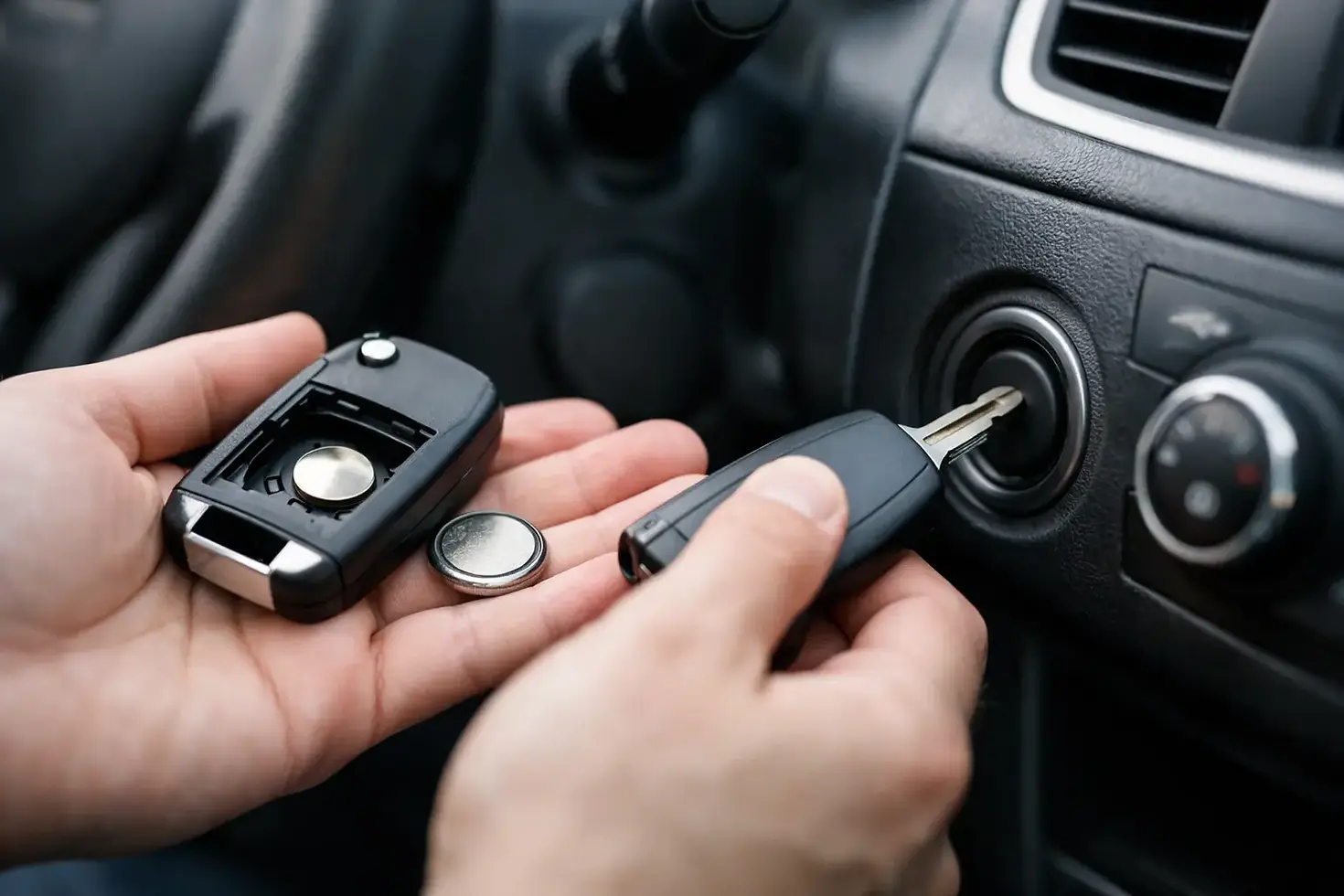
How to Start a Car With a Flat Fob Battery

Trying to start a car with a flat fob battery outside work, on the school run or before a long journey can feel like a complete stop. The reassuring news is that many modern cars have an emergency starting method built in. A flat remote battery does not always mean the key itself has failed, and it does not necessarily mean you need recovery.
Can you start a car with a flat fob?
Usually, yes. Most keyless fobs contain two separate systems. The battery powers the remote buttons and keyless entry signal, while a small transponder chip communicates with the vehicle immobiliser. On many cars, that chip can still be recognised when the fob battery is flat.
The exact emergency procedure depends on the make, model and year. Some vehicles have a hidden key blade and a conventional ignition slot. Others use an emergency reader position near the steering column, centre console or start button. Holding the fob in the correct place allows the vehicle to read the chip and start the engine.
There is one major exception: if the vehicle's main 12V battery is flat, an emergency fob-reading method will not start it. The dashboard may be dim, the central locking may fail and the starter may not turn. That is a vehicle battery problem rather than a fob battery problem.
First, check whether it is the fob battery
A weakening fob battery often gives warning signs before it stops working. You may need to stand closer to the car, press the unlock button more than once, or see a key battery warning on the dashboard. If the remote no longer unlocks the vehicle but the dash lights come on normally once you are inside, the fob battery is the likely cause.
If neither the remote nor the car responds, check whether another key works. Also consider whether the vehicle battery could be discharged. Do not repeatedly press the start button for long periods, as this can drain an already weak vehicle battery further.
Use the hidden mechanical key to get inside
Most smart fobs have a mechanical emergency key blade concealed inside. Look for a small release catch on the side or back of the fob, then slide or press it to remove the blade. The blade opens the driver's door through a physical lock barrel, which is commonly hidden beneath a plastic cover on the door handle.
Use the blade gently. If the lock has not been used for years, it can feel stiff, particularly after poor weather. Forcing it can snap the blade or damage the barrel. If it will not turn with reasonable pressure, stop and arrange professional assistance.
Opening the door manually may trigger the alarm. This is normal on many vehicles. Once you use the recognised emergency start method, the alarm should stop. If it does not, avoid disconnecting the vehicle battery or trying to silence it by force. The car needs to recognise the correct key.
How to start a car with a flat fob battery
Check the handbook first if it is available, as manufacturers describe the designated emergency reader location. The method is commonly one of the following.
Hold the fob against the start button
On many push-button start cars, press the brake pedal in an automatic or the clutch in a manual, then hold the fob directly against the start button while pressing it. Keep the fob in contact until the engine starts. This allows a short-range reader to detect the transponder inside the fob.
Place the fob at the emergency reader point
Some cars have a marked reader area rather than using the start button. It may be in the centre console, below the steering wheel, inside a storage compartment or in the cup-holder area. Look for a key symbol, although not every manufacturer marks it clearly.
Place the fob flat against the reader point, apply the brake or clutch as required, and press the start button. Do not move the fob away too quickly. If the car does not respond, reposition it and try once more.
Use the ignition key slot
A number of vehicles with remote fobs still have a physical ignition barrel, sometimes concealed behind a trim cap. Insert the emergency blade and turn it as you would a conventional key. On other models, the full fob inserts into a dashboard slot. The correct arrangement is model-specific, so never force the fob into an opening that does not clearly accept it.
If your car says “Key not detected” after these steps, the issue may be more than a depleted battery. The transponder chip, fob circuit board, immobiliser antenna or vehicle wiring may need checking.
What not to do when the fob will not work
A stressful roadside problem can lead drivers to try quick fixes that create a larger repair bill. Avoid prising the fob open with a screwdriver, wrapping it in foil, heating it or repeatedly hitting it against the start button. None of these methods repairs a damaged chip or restores a depleted battery.
Do not buy a random replacement remote and assume it will start the car. The physical shell may look identical, but the remote and transponder normally need to be programmed to your specific vehicle. A fob can also lose synchronisation after a poor-quality repair or water damage.
It is also worth avoiding online instructions that recommend bypassing the ignition or immobiliser. Modern vehicle security systems are designed to prevent this, and attempting it can damage electronic control units or trigger further faults.
Replace the battery properly once you are moving
Once the vehicle has started, replace the fob battery as soon as practical. Check the battery type printed inside the fob, often a coin cell such as CR2032 or CR2025. Use the exact specified type. Two batteries can look similar but have different thicknesses, and fitting the wrong one may prevent the fob case closing correctly or make poor contact.
Open the case with a plastic trim tool or the fob's intended release point where possible. Note the positive and negative orientation before removing the old cell. Avoid touching the new battery faces more than necessary, then test lock, unlock and boot-release functions from a short distance away.
If the fob still fails after fitting a fresh battery, do not keep dismantling it. The problem may be a worn button contact, cracked solder joint, damaged circuit board or failed transponder. These faults require proper diagnosis rather than another battery.
When a mobile auto locksmith is the right call
Call a specialist if you are locked out, the hidden key will not release the door, the car will not detect the fob, or you have lost every working key. A professional mobile auto locksmith can identify whether the problem is the fob, transponder, immobiliser system or vehicle battery before recommending the right repair.
For drivers across Wolverhampton, Birmingham, Walsall, Dudley and the wider West Midlands, Ro Driveline provides mobile assistance at home, work or roadside. Non-destructive entry protects your vehicle where access is the problem, while professional diagnostic and programming equipment can support replacement remotes, smart keys and all-keys-lost situations for most vehicles on UK roads.
A straightforward replacement or spare-key programming appointment commonly takes around 30 to 60 minutes once the correct key is available and the vehicle is accessible. All-keys-lost work can take longer because a new key must be created and programmed from the vehicle itself. Pricing varies by registration, key type and the work required, so request a clear quote before work begins.
A spare key prevents the next emergency
If one fob has failed, been damaged or has a weak casing, the second key may not be far behind. Getting a tested spare key while you still have a working original is usually simpler than arranging a replacement after losing all keys. It also gives you a practical fallback for commuting, family trips and shared drivers.
Keep the spare separate from the daily key, not in the same bag or at the same address in the car. Check both fobs every few months, replace weak batteries promptly and make sure the emergency blade can still be removed. A small check at home is far easier than dealing with a silent fob in a dark car park.


Comments