
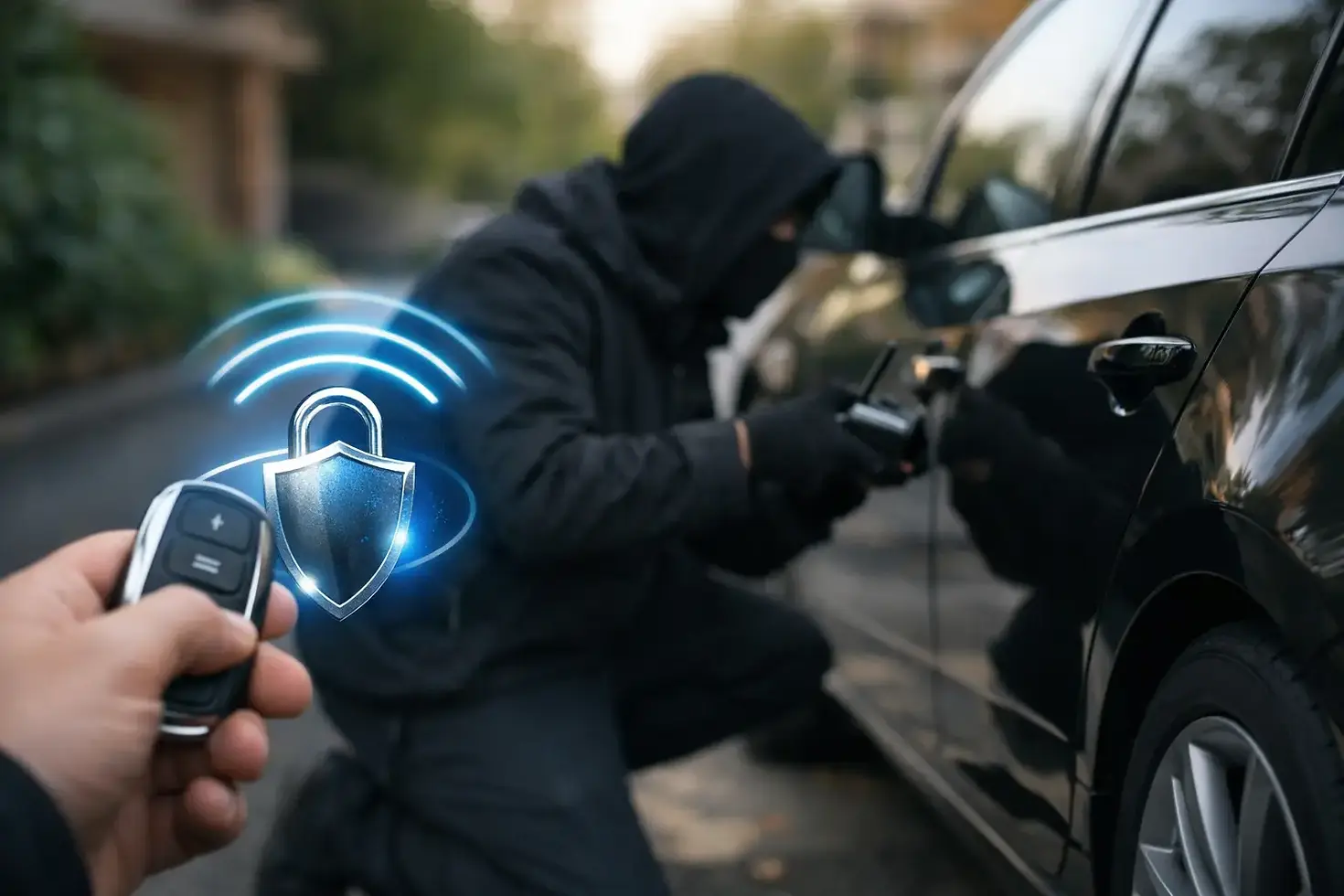
How to Protect Keyless Cars From Relay Theft

A keyless car should make daily driving easier, not leave you worrying about whether it is safe on the drive. Learning how to protect keyless cars starts with understanding that the fob is part of the vehicle's security system. Treat it with the same care as your house keys, particularly when the car is parked outside your home.
Keyless theft is a genuine concern, but it is not a reason to stop using your vehicle or panic every time you hear about a theft locally. A few sensible measures can reduce the opportunity for thieves and give you better control over your car's security.
How to protect keyless cars from relay theft
The most widely discussed risk is relay theft. This is where criminals use electronic equipment to detect and extend the signal from a keyless fob inside a property. One person may stand close to the house while another stands near the vehicle. If the signal is successfully relayed, the car may believe the key is nearby and allow entry or starting.
The simplest defence is to store every keyless fob in a properly tested signal-blocking pouch or box when it is not in use. Keep it away from external doors, windows, letterboxes and ground-floor rooms at the front of the property. A bowl or hook beside the front door is convenient, but it is also the place most likely to leave the signal within reach.
Do not assume a Faraday pouch works indefinitely. Materials can wear out, seams can split and a key may not be fully enclosed. Test it regularly: place the key inside, stand next to the car and try the door handle or start function. If the vehicle responds, replace the pouch or use a better-quality signal-blocking box.
Remember that relay protection addresses one type of theft, not every possible method. Thieves may also target a vehicle through physical damage, stolen keys or weaknesses specific to a model. Good security works in layers.
Make the vehicle harder to take
Always lock the car, even on your own drive. Check that it has actually locked rather than relying solely on a beep or flashing lights. Some keyless vehicles can remain accessible if the fob is close by, a door has not shut fully, or a setting has been changed.
A visible steering wheel lock is still worthwhile. It does not make a car impossible to steal, but it adds time, noise and difficulty. That can be enough to make a thief move on. Driveway posts, gates and a well-positioned security camera offer similar deterrence, especially where a vehicle is parked in an exposed position overnight.
If you have a garage, use it where practical. For cars parked on the drive or roadside, choose a lit area and avoid leaving valuables, bags, tools or documents on display. Vehicle paperwork can give criminals useful information, so take it indoors rather than storing it in the glovebox.
An approved tracking system can also help recover a stolen vehicle, though it does not prevent theft. It is most useful alongside physical security and sensible key storage, not as a replacement for them.
Check your car's keyless settings
Many newer cars have options that can reduce the keyless system's exposure. Depending on the make and model, this may include switching off passive entry, requiring a button press to unlock, or putting the fob into sleep mode when it is stationary.
The right setting depends on how you use the car. Disabling passive entry can be less convenient when you are carrying shopping, managing children or getting in and out for work, but it may offer additional reassurance if the vehicle is regularly parked outside. Check the owner's handbook or ask a qualified automotive locksmith or dealer which options apply to your model.
Some fobs enter sleep mode automatically after they have been still for a set period. Others need a specific button sequence. Avoid experimenting if you are unsure, as you do not want to accidentally disable the only working key before a journey. If you have one functioning key, arranging a properly programmed spare is a sensible precaution.
Protect the keys themselves
Keep your keys separate from the vehicle whenever possible. Never leave a spare in the car, taped under a wheel arch or hidden in an obvious place around the property. These hiding places are well known and can turn a minor security issue into a complete vehicle theft.
If you buy a used car, establish how many working keys are in circulation. Ideally, you should receive every key supplied with the vehicle. If keys are missing, consider having the vehicle's key system assessed and any absent keys removed from its memory where the vehicle allows it. This is particularly relevant if the previous owner, a trader or a repairer may still have access to an old fob.
Take care when handing keys over for servicing, valeting or repairs. Use established businesses and avoid attaching identifying details such as your full address to the key ring. A registration number may be needed for legitimate work, but there is no reason for a key label to advertise where the car is kept.
If your fob is lost or stolen, act promptly. Do not wait to see whether it turns up if you believe it may have been taken with information that identifies your vehicle. A professional auto locksmith can advise whether a replacement key, reprogramming or deletion of a missing key from the vehicle's memory is appropriate.
Avoid a security measure that leaves you stranded
It is easy to focus on theft prevention and forget the other side of keyless ownership: access. A damaged fob, weak battery or wrongly stored spare can leave you unable to unlock or start the vehicle when you need it most.
Replace the fob battery when you notice reduced range, inconsistent locking or a dashboard warning. Use the correct battery type and avoid touching electrical contacts unnecessarily. If the key is still unreliable after a battery change, the issue may be with the fob, vehicle antenna, door handle sensor or programming rather than the battery itself.
Keep the emergency mechanical key blade available and know where its hidden door lock is located. Many keyless cars have one, but the lock cover can be easy to miss until you are standing outside in the rain with a flat fob battery. The owner's handbook should explain the emergency starting procedure, which often involves placing the fob in a specific location inside the vehicle.
A spare key should be fully cut and programmed, not simply an untested fob in a drawer. Test it occasionally. A programmed spare can prevent the disruption and higher cost of an all-keys-lost situation, particularly if your main key fails away from home.
If your keyless car will not unlock or start
A non-responsive keyless car is not always a security problem. The fob battery may be flat, the vehicle battery may be low, or there may be an electrical or key programming fault. Do not force the door, smash a window or try to bypass the ignition. These actions can cause expensive damage and may create further security issues.
Use the mechanical key blade if your vehicle has one and follow the manufacturer's emergency-start method. If that does not restore access, professional non-destructive entry is the safest next step. An automotive locksmith can assess whether the problem is the fob, the car battery, the immobiliser system or the keyless receiver, then provide the appropriate solution on site.
For drivers across the West Midlands, Ro Driveline can attend mobile lockouts, lost-key situations and keyless faults with diagnostic and programming equipment. Vehicle registration details allow an upfront quote to be prepared before work begins, and most programmed replacement-key jobs can be completed on site in around 30 to 60 minutes once the correct key is available.
Keyless car security FAQs
Does wrapping a key in foil protect it from relay theft?
Foil may block a signal in some cases, but it is inconsistent, easy to tear and difficult to rely on. A tested Faraday pouch or metal signal-blocking box is a more practical long-term choice.
Is a steering wheel lock still useful on a keyless car?
Yes. It is a visible physical barrier that slows an attempted theft. It works best alongside secure key storage, locked doors and suitable driveway security.
Should I turn off keyless entry?
It depends on your vehicle, where it is parked and how you use it. If the option is available and you are concerned about relay theft, disabling passive entry can reduce risk. Keep a working spare and understand the alternative unlocking method first.
What should I do if my only keyless fob is lost?
Secure the vehicle if possible and arrange professional assistance quickly. A specialist can gain entry without unnecessary damage, create and programme a replacement key, and advise on removing the missing key from the vehicle's memory.
Small habits make the biggest difference: put the fob away securely tonight, check that the car has locked, and do not wait for a lost or failing key to become an emergency. If access fails, calm, professional help is available where your vehicle is parked.


Comments