
Replacement Key Coding: What Your Car Needs

Your replacement key may look right, turn in the ignition or fit the door, yet still leave you stranded. That is because replacement key coding is what allows the vehicle to recognise the key’s electronic identity and permit it to start. For most modern cars, cutting the metal blade is only part of the job.
Whether you have lost your only key outside work in Birmingham, your remote has stopped responding in Walsall, or you want a spare before a long journey, the aim is simple: leave with a key that unlocks, starts and works as it should.
What replacement key coding actually does
Most vehicles on UK roads use an immobiliser system. Inside the key, fob or smart key is a small transponder chip. When you try to start the car, the vehicle checks that chip against its stored security data. If the code is accepted, the immobiliser allows the engine to run. If it is not, the engine may crank without starting, start briefly then cut out, or not respond at all.
Replacement key coding adds the new key to that authorised system. Depending on the vehicle, this may involve programming the transponder, pairing the remote-locking buttons, configuring keyless entry functions or synchronising a smart key. These are related jobs, but they are not always the same thing. A key can start a car while its remote buttons do not work, or unlock the doors but fail the immobiliser check.
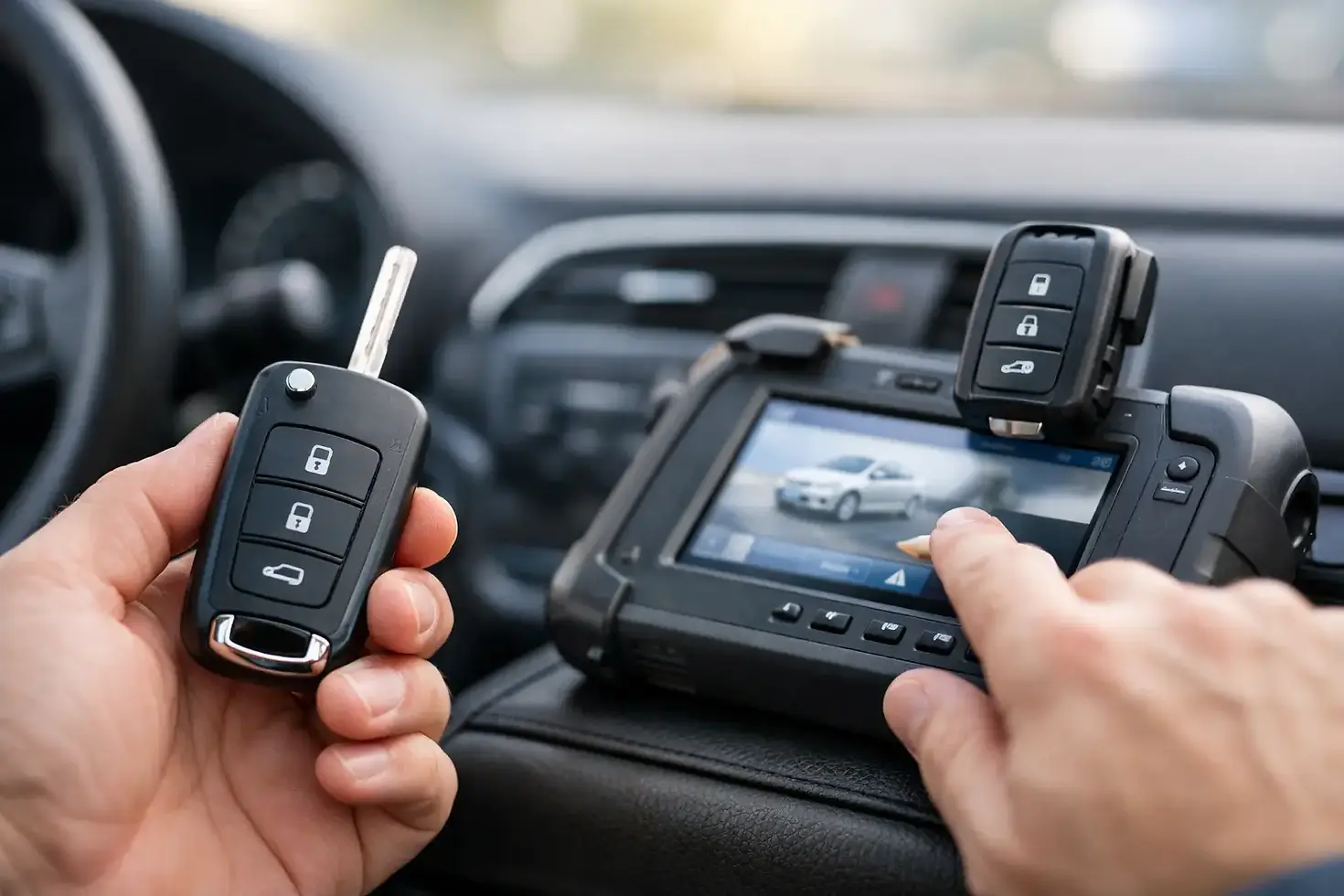
Professional diagnostic and programming equipment communicates with the vehicle’s security system and completes the process correctly. Once coding is finished, the key should be tested for starting, locking, unlocking and any relevant boot or keyless functions before the job is signed off.
When do you need a key coded?
A replacement generally needs coding whenever it is new to the vehicle. This includes a lost car key replacement, an additional spare, a replacement remote fob and many smart keys. The exact requirements depend on the make, model, year and security system.
If you still have one working key, programming a spare is often more straightforward. The technician can use the existing working key and access the vehicle normally, then add the new key to the system. This is a sensible preventative job for households with one shared car, drivers who travel for work or anyone who cannot afford a lost-key disruption.
An all-keys-lost situation is more involved. With no working key available, the vehicle may need non-destructive entry, the locks may need decoding to cut the blade accurately, and the immobiliser data may need to be accessed before new keys can be programmed. It is still a mobile job for many makes and models, but it requires the right equipment, verified vehicle ownership and more time.
You may also need help when a key has been damaged, water affected or intermittently detected. A worn battery can stop remote functions, but changing the battery will not repair a failed transponder chip, broken circuit board or key that has lost synchronisation. A proper diagnosis avoids paying for coding when the fault lies elsewhere.
Replacement key coding at your location
A dealership appointment can mean arranging recovery, taking time off work and waiting for a slot. A mobile auto locksmith brings the cutting, diagnostic and programming equipment to your driveway, workplace or roadside location instead.
The process usually begins with the vehicle registration, make, model and location. This allows the locksmith to check likely key availability, the programming method and provide a clear quote before travelling. You will be asked to show identification and proof that you are entitled to access the vehicle. This protects owners and helps ensure vehicle security is taken seriously.
On arrival, the technician confirms the fault and assesses the key type. If you are locked out, entry should be gained using non-destructive methods wherever possible. The key blade can then be cut from the lock, an existing key or relevant vehicle data, depending on the job.
The new key is programmed to the vehicle, then tested carefully. With an all-keys-lost job, any old missing keys can often be removed from the vehicle memory during programming. That means a lost key should no longer be authorised to start the car, giving you useful reassurance if you are concerned it has fallen into the wrong hands.
How long does it take?
For many vehicles, a planned spare key or straightforward replacement key coding appointment takes around 30 to 60 minutes once the technician is with the car. The time can be shorter for some older systems and longer for smart keys, high-security vehicles or faults that need investigation.
All-keys-lost work generally takes longer because the vehicle must be opened safely, the key blade created and security access established before programming can begin. A dead vehicle battery, a damaged ignition, an aftermarket alarm or previous poor-quality key work can also add time.
No reputable locksmith should promise the same timing for every car before checking the details. What matters is that you receive an honest assessment, a suitable key and a fully tested result rather than a rushed fix that leaves a function unresolved.
Why a cheap unprogrammed key is not always a saving
Online replacement keys can be tempting, particularly when the original fob has cracked or the buttons have worn out. The problem is that appearance alone does not confirm compatibility. The blade profile, transponder type, frequency, circuit board and remote configuration all need to match the vehicle.
Some vehicles will accept an aftermarket key when it is correctly selected and programmed. Others are more particular and may require an original-quality unit or a specific compatible part. A low-cost key with the wrong electronics can lead to a second purchase, further programming charges and more time without a usable car.
There is also a difference between copying an existing transponder and adding a fully programmed key to the car’s security memory. The best option depends on your vehicle and circumstances. If you want remote buttons, keyless functions and the strongest protection when a key has been lost, full programming is often the appropriate route.
Problems that can look like coding faults
Not every key issue is a coding issue. If your car will not start, the cause could be a flat vehicle battery, faulty starter, steering-lock fault, ignition problem or dashboard warning unrelated to the key. If the doors do not unlock remotely, the fob battery, buttons or receiver may be at fault.
A capable auto locksmith will check the basic symptoms before programming a replacement. For example, if the key starts the engine but the remote does nothing, the immobiliser coding may already be correct. If the remote works but the car displays an immobiliser warning, the transponder or vehicle security system needs closer attention.
Clear diagnosis saves time and keeps costs transparent. It also prevents the frustration of replacing a key when the vehicle itself needs a different repair.
Questions drivers often ask
Can a replacement key be programmed without the original?
Yes, in many cases. This is known as an all-keys-lost job. The method varies by vehicle, and proof of ownership is required, but a mobile locksmith can often cut and programme new keys at the vehicle without dealer recovery.
Will coding erase my existing keys?
It can, depending on the vehicle and programming procedure. When adding a spare, working keys are normally checked and retained where possible. If a key is lost or stolen, ask for it to be removed from the authorised memory so it cannot be used to start the car.
Do I need to take the car to a garage?
Usually not. Mobile key programming can be carried out where the vehicle is parked, including at home, work or the roadside. This is particularly helpful when the car cannot be started.
Can you programme a key bought elsewhere?
Sometimes, but it must be the correct type and in suitable condition. Supplying the key is not always the cheapest route if it proves incompatible. Checking the vehicle registration first is the sensible way to avoid wasted cost.
A failed key does not have to become a lost day. If you need a replacement, a working spare or urgent help after losing all keys, have your registration and location ready, then request a clear quote. Ro Driveline can come to you across the West Midlands, handle the coding on site and help you get moving again.


Comments