
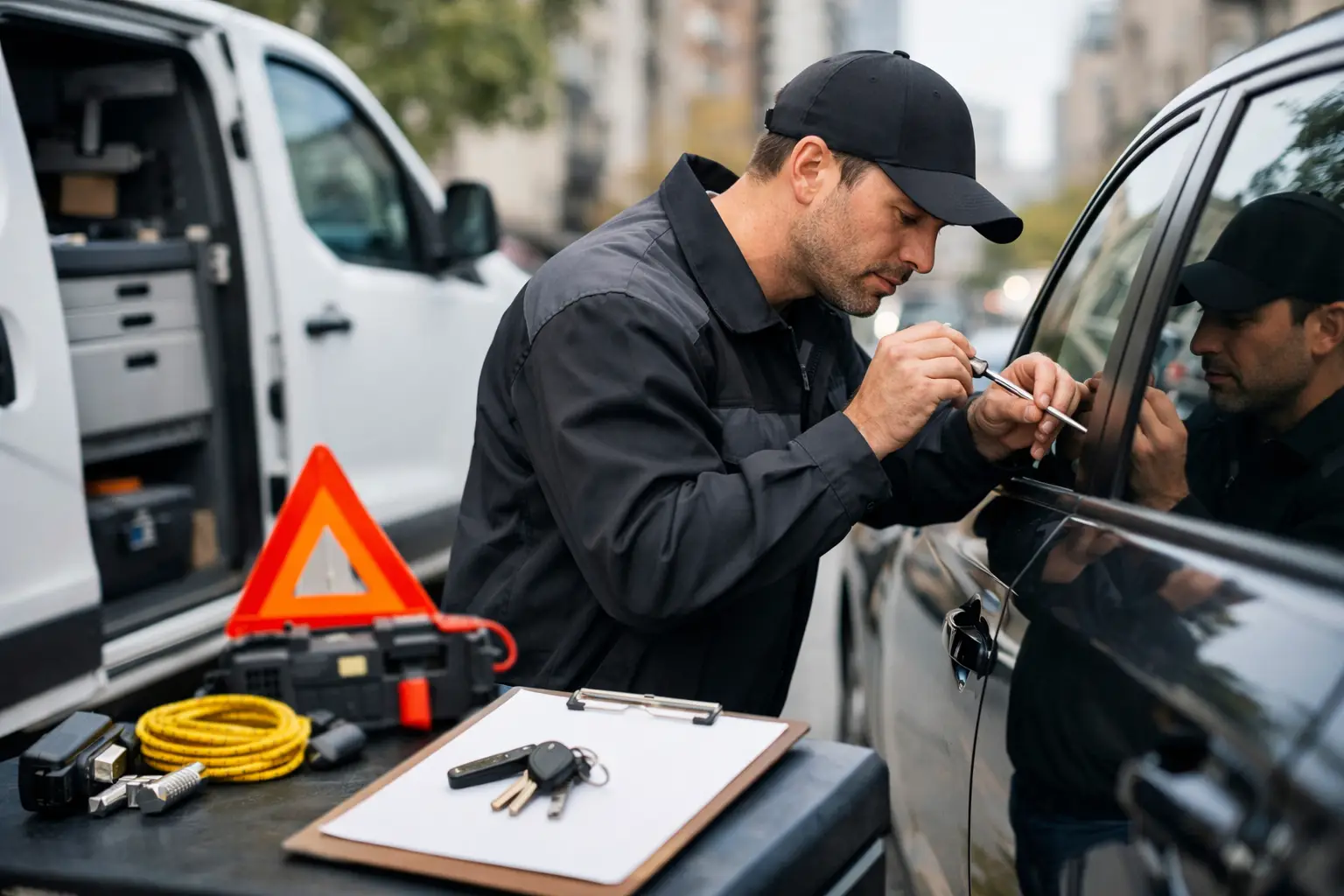
Mobile Locksmith Quality: What Drivers Should Expect

A locked car outside work, a key that will not start the engine, or the realisation that every key has been lost can turn an ordinary day into a stressful one quickly. Mobile locksmith quality is what separates a safe, effective roadside solution from a costly delay, vehicle damage or a key that works only some of the time.
For drivers across the West Midlands, quality should mean more than arriving with a blank key and a few tools. It means correctly identifying the vehicle, gaining entry without damage where possible, programming the replacement properly and checking that the car starts, locks and responds as it should before the technician leaves.
What mobile locksmith quality looks like in practice
A professional mobile auto locksmith is prepared to work at your home, workplace, car park or roadside location. The vehicle does not need to be recovered to a dealer simply because the key has failed or gone missing. However, working on-site still requires the right diagnostic equipment, key-cutting machinery and vehicle-specific knowledge.
The first sign of quality is a clear assessment. A technician should ask for the vehicle registration, make, model and year, along with a straightforward description of the problem. This helps establish whether the issue is a flat remote battery, a damaged key blade, a faulty ignition, a lost transponder key or a keyless entry fault. It also allows a realistic quote to be given before work begins.
Quality also means treating every vehicle as an electronic security system, not just a door with a lock. Modern car keys often contain a transponder chip, remote-control board or proximity component that must communicate with the car correctly. Cutting a blade that physically turns in the lock is not enough if the immobiliser will still prevent the engine from starting.
Safe entry matters when you are locked out
A vehicle lockout is urgent, but it should not lead to rushed or destructive work. Professional non-destructive entry techniques are designed to regain access while protecting the lock, door frame, window seals and interior mechanisms. The correct method depends on the make, model and locking system.
For example, some vehicles can be opened through specialist decoding and access methods, while others require a different approach because of their deadlocking or electronic security features. A reputable locksmith will explain if a particular vehicle presents extra complexity rather than making promises that ignore its design.
Avoid anyone who suggests smashing a window or forcing a door as the normal answer to a lockout. Those options can create a much larger repair bill and leave the vehicle insecure. In most cases, the right equipment and experience allow access without causing avoidable damage.
Once entry has been gained, the job should not end there. If the original key is inside the vehicle and works normally, the technician should confirm that no lock or electronic system has been affected. If the key has been lost, the next stage is producing and programming a secure replacement.
Lost all keys requires more than a spare key copy
There is an important difference between adding a spare key and replacing all lost keys. When one working key is available, it can often be used to obtain the information needed to cut and programme an additional key more directly.
With all keys lost, the locksmith may need to retrieve key data from the vehicle, decode locks, access security modules or carry out more involved programming procedures. The time, equipment and cost can therefore differ significantly. A clear provider will explain this before starting, rather than quoting a spare-key price for an all-keys-lost job.
For security, replacement work should also consider removing missing keys from the vehicle's memory where the vehicle system allows it. This helps prevent an old lost key from continuing to start the car if it is later found by somebody else.
Accurate programming is central to mobile locksmith quality
A replacement car key has several jobs. It may need to unlock the doors, operate the remote buttons, communicate with the immobiliser, start the engine and, on some cars, support keyless entry or push-button start. Each function should be tested before the vehicle is handed back.
Professional diagnostic and programming equipment gives a mobile locksmith the ability to communicate with the vehicle's systems on-site. That does not make every job identical. Some makes have extra security steps, PIN requirements or module access procedures, and some faults cannot be solved by programming alone. A failing vehicle battery, damaged wiring, faulty receiver or ignition issue may need separate repair.
This is where an experienced technician adds value. Instead of repeatedly programming keys without diagnosing the cause, they should identify whether the fault sits with the key, the vehicle or both. Honest advice may sometimes be that an auto electrician or garage is needed after the key has been ruled out.
Programming time is usually around 30 to 60 minutes for many standard replacement or spare-key jobs, but it depends on the vehicle and the condition of its systems. Lost-all-key work, premium vehicles and keyless systems can take longer. A quality service gives an estimate based on the actual vehicle, not a vague one-size-fits-all promise.
Clear pricing prevents a bad situation getting worse
When you are stranded, the lowest advertised price is not always the lowest final cost. A quote should make clear what is included: attendance, non-destructive entry where applicable, key cutting, programming and the type of key or remote supplied. If the vehicle needs a more complex procedure, that should be discussed before additional work is carried out.
Providing the registration at the quote stage helps the locksmith identify the likely key type and programming requirements. It also reduces surprises on arrival. If you can, share whether you have any working keys, whether the car is locked, and whether it is parked somewhere with restricted access.
A transparent service will not hide behind technical language. You should be able to understand what you are paying for and why. There can be genuine differences in cost between a basic transponder key, a remote fob and a smart proximity key, but those differences should be explained in plain terms.
Questions to ask before you book
Before agreeing to a callout, ask whether the locksmith covers your exact vehicle and fault, whether they can cut and programme the key on-site, and what the quoted price includes. It is also sensible to ask how they will verify that you are authorised to access the vehicle.
Proof of ownership or entitlement protects you as well as the vehicle. A professional will take security seriously, particularly for lost-key and keyless-entry work. Be ready with identification and vehicle documents where possible, although the practical process can vary when documents are locked inside the car.
You can also ask whether the replacement will be tested fully before the job is complete. The expected answer is yes: locking, unlocking, starting and relevant remote or proximity functions should be checked at the vehicle.
When a spare key is the better decision
The best time to arrange a spare car key is before the remaining key becomes unreliable, damaged or lost. A planned appointment is usually less disruptive than an emergency callout, and having a second working key can save considerable time if the primary key fails.
Pay attention to warning signs such as intermittent remote buttons, a cracked key case, a loose key blade, water damage or a dashboard message showing that the key is not detected. Replacing a failing key early gives you options. Waiting until it stops working completely may turn a simple duplicate into an urgent all-keys-lost situation.
Ro Driveline provides mobile key cutting, programming and emergency vehicle access across Wolverhampton, Birmingham, Walsall, Dudley and the wider West Midlands. The focus is to restore access and mobility at your location with professional equipment, clear communication and care for the vehicle.
If you are locked out, have lost your keys or need a replacement that works properly, request immediate assistance with your registration and location ready. If your only key is showing signs of failure, arranging a tested spare now is often the calmest way to avoid a roadside problem later.


Comments