
How to Choose Spare Keys for Your Vehicle

A spare car key is most useful before there is a problem. If your only key is lost, damaged, locked inside the car or simply stops communicating with the vehicle, a routine job can quickly become an all-keys-lost situation. Knowing how to choose spare keys means choosing one that will start your vehicle, operate the functions you need and be programmed correctly - not just a key that looks similar.
For drivers across the West Midlands, the right spare key can prevent missed work, recovery costs and the inconvenience of waiting for a dealership appointment. The best choice depends on your vehicle, the key you already have and how you use the car day to day.
Start with the key your vehicle actually needs
Modern car keys do much more than turn a lock. Most contain a transponder chip that communicates with the vehicle’s immobiliser. Many also have remote locking buttons, a flip-key blade, keyless entry functions or a smart key that needs to be present inside the car before it will start.
The simplest way to identify the correct spare is to check your existing working key and provide the vehicle registration when requesting a quote. This allows a professional auto locksmith to identify the vehicle details and establish which key type, blade and programming procedure are likely to be required.
A basic mechanical key may be suitable for an older vehicle with no electronic immobiliser. For most cars on UK roads, however, a plain cut key will open a door at best. It will not start the engine unless its transponder is correctly programmed. Choosing a spare is therefore about matching both the physical key and the vehicle’s electronics.
Common spare key options
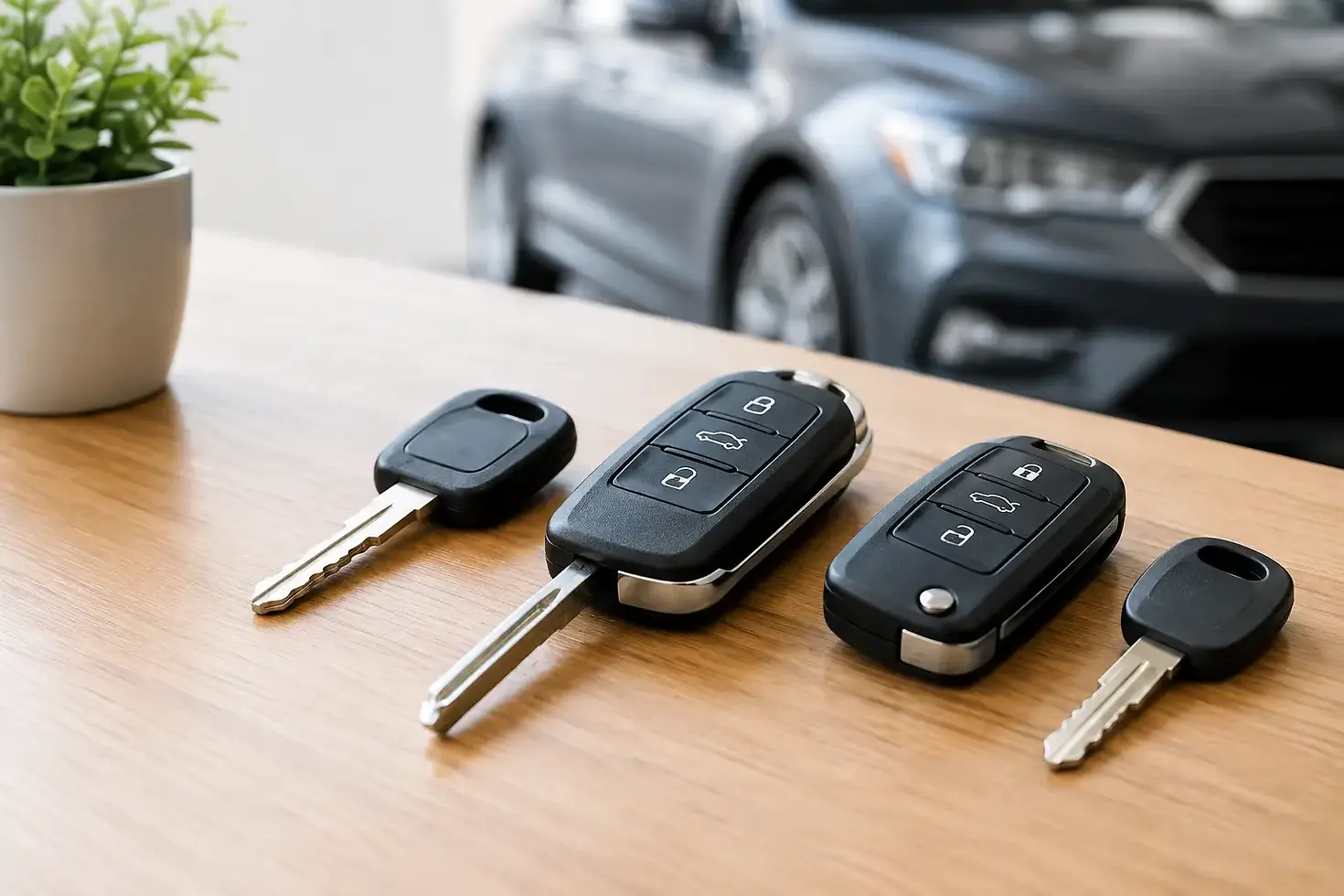
A traditional remote key combines a metal blade with buttons for central locking. It is often the practical choice for vehicles that use a key in the ignition. A flip key stores the blade inside the fob and is common on many Volkswagen Group, Ford, Vauxhall and Peugeot models.
Proximity or smart keys are used on push-button-start vehicles. They can allow keyless entry and starting when the fob is detected in the cabin. These keys are more complex and usually cost more because the remote, transponder and keyless functions must all be compatible and programmed.
Some drivers only want an emergency starting key. Others need a full remote or smart key with every original feature. Be clear about this from the outset. A lower-cost emergency key can be useful as a backup, but it may not offer the convenience of remote locking or keyless entry.
Choose the features you will genuinely use
There is no single best spare key for every motorist. A second full-function key is usually the strongest option for a family car, a shared vehicle or anyone who relies on their car every day. It means another driver can use the vehicle without swapping keys, and it gives you a direct replacement if the main remote fails.
An emergency spare may be enough if you keep it securely at home and only need a way to regain access and start the vehicle. This can suit drivers who rarely use the spare but want protection against losing their main key.
Think about where the spare will live. If it is stored at home, full remote locking may be less essential. If it will be used by a partner, parent, adult child or employee, matching the functions of the original key avoids confusion later. For keyless vehicles, choose a properly programmed smart key rather than relying on a cheap untested fob.
It is also worth considering the condition of your current key. Worn buttons, an intermittent remote signal, a cracked case or a key blade that sticks in the ignition can indicate that your main key is nearing the end of its useful life. In that situation, arranging two reliable working keys is often more sensible than duplicating a failing one.
New, aftermarket or used: understand the trade-off
Genuine manufacturer keys, quality aftermarket keys and refurbished remote cases can all have a place, depending on the vehicle and the result you need. The critical point is compatibility and professional testing.
A genuine key is built to the original specification and may be the preferred option for newer vehicles or complex smart-key systems. It can cost more, and availability may vary by make and model.
A good-quality aftermarket key can provide a reliable, cost-effective alternative for many vehicles. It still needs the correct chip, frequency, blade and programming. A professional locksmith can advise whether this is suitable for your particular car rather than making assumptions based on its appearance.
Be cautious with used keys and remotes bought online. Even when the case and buttons look right, the internal transponder may be locked to another vehicle, the radio frequency may be wrong or the circuit board may be damaged. Some used fobs can be prepared for reuse on certain models, while others cannot. Buying the wrong unit can leave you paying twice and still without a working spare.
Replacing only a broken key case is different again. If the circuit board and transponder from your existing key still work, moving them into a new case can be a simple repair. If the electronics have failed, a replacement key and programming will be needed.
Why cutting is only part of the job
A key must physically match the vehicle’s locks, but modern vehicles also need electronic authorisation. The transponder code must be added to the immobiliser system so the car recognises the key as permitted to start it. Remote buttons and keyless functions may require separate programming steps.
This is why a key copied at a shop can sometimes unlock the door but fail to start the car. The blade has been cut, but the immobiliser has not been programmed. The result is frustrating and can create a false sense of security until the day the main key is unavailable.
A mobile auto locksmith can cut and programme the key at your home, workplace or roadside location, then test it with the vehicle. In many straightforward spare-key jobs, the work takes around 30 to 60 minutes once the correct key is available. More complex smart systems, damaged locks or manufacturer security procedures can take longer.
Give accurate details before booking
A clear quote starts with accurate vehicle information. Providing the registration is the quickest route, but it also helps to know the make, model, year and whether the car has a key ignition or push-button start. Tell the locksmith whether you have at least one working key.
That last detail matters. Creating a spare when one working key is present is usually simpler than replacing every key after they have all been lost. With all keys lost, the vehicle may need additional decoding, security access procedures and immobiliser programming. The cost and time can therefore be different.
If you have a key that works only intermittently, explain the fault. A weak remote battery is not the same as a failed transponder, damaged circuit board or ignition fault. Diagnosing the issue correctly helps avoid ordering a spare key that does not address the real problem.
Keep the spare safe, but not too safe
A spare key should be available when you need it without creating a theft risk. Avoid hiding it inside or underneath the vehicle. Thieves know the common hiding places, and some insurers may take a poor view of keys left with the car.
Keeping a spare at home with a trusted person is usually the safest choice. If you use a Faraday pouch for a keyless vehicle, store both smart keys appropriately to reduce the risk of relay theft. Do not keep both keys in the same bag when travelling - losing one bag should not leave you without access to the car.
For households with several drivers, label keys discreetly and check each one occasionally. A spare that has sat unused for years may have a flat battery, damaged buttons or an unnoticed fault. Testing it every few months is a small step that can save a stressful callout later.
When to arrange a spare key now
The best time to arrange a spare is while your main key still works. You have more options, the process is usually quicker and there is no pressure caused by being stranded. This is especially worthwhile before a long journey, after buying a used car supplied with one key, or when your current remote is showing signs of wear.
Ro Driveline can cut and programme suitable spare keys on-site across the West Midlands, with upfront pricing based on your vehicle registration. The vehicle remains where it is, and the completed key can be tested before the job is finished.
Frequently asked questions
Can any locksmith make a spare car key?
Car key work requires the right diagnostic equipment, key stock and experience with vehicle immobiliser systems. A locksmith who specialises in automotive keys can identify the correct key, cut it and programme it to the vehicle rather than supplying a key that only fits the lock.
Will a spare key affect my original key?
A correctly programmed spare should not stop an existing working key from operating. The locksmith should test both keys where possible after programming. If a key needs to be removed from the vehicle’s memory for security reasons, this should be explained before work begins.
Is it cheaper to get a spare before I lose all my keys?
Usually, yes. When a working key is available, the vehicle can often be accessed and programmed more directly. Replacing all lost keys can involve extra labour, security procedures and, in some cases, more extensive work to establish the correct key data.
A working spare is not a luxury item when your car supports your job, family plans and everyday travel. Arrange it while the choice is straightforward, then keep it secure, test it occasionally and know it is ready when you need it.


Comments